
Does Paint Protection Film Actually Work? What It Does Well (and Where It Doesn't)
You wash the car on a Sunday and spot a tiny chip on the bonnet. It wasn't there last week. A stone flicked up on the motorway did it. Could a clear film have stopped that mark?
That question sits behind most paint protection film quotes. Some people call it an invisible shield. Others say it's a pricey sticker. The truth sits in the middle, and it's worth knowing before you pay.
This guide explains, in plain words, what paint protection film does well, where it falls short, and what makes it last. First comes a quick answer. Then we look at what PPF is built for, its real limits, and why the fit matters as much as the film.
By the end, you'll know if it suits your car and how you drive.
Does paint protection film actually work?
Yes, paint protection film works for the job it's made for. PPF is a clear, tough film fitted over your car's paint. It takes the hit from small stones, grit and light scrapes, so your paint doesn't.
It works well against:
- Stone chips on the bonnet, bumper and mirrors
- Light scratches and swirl marks (many films heal with warmth)
- Marks from bird droppings, bugs and tree sap
It won't stop:
- Dents or crash damage
- Deep gouges from keys or sharp objects
- Damage already on the paint before fitting
How well it works also depends on the film quality and how carefully it's fitted.
Learn more about paint protection film in Leeds.
What Paint Protection Film Is Designed to Do
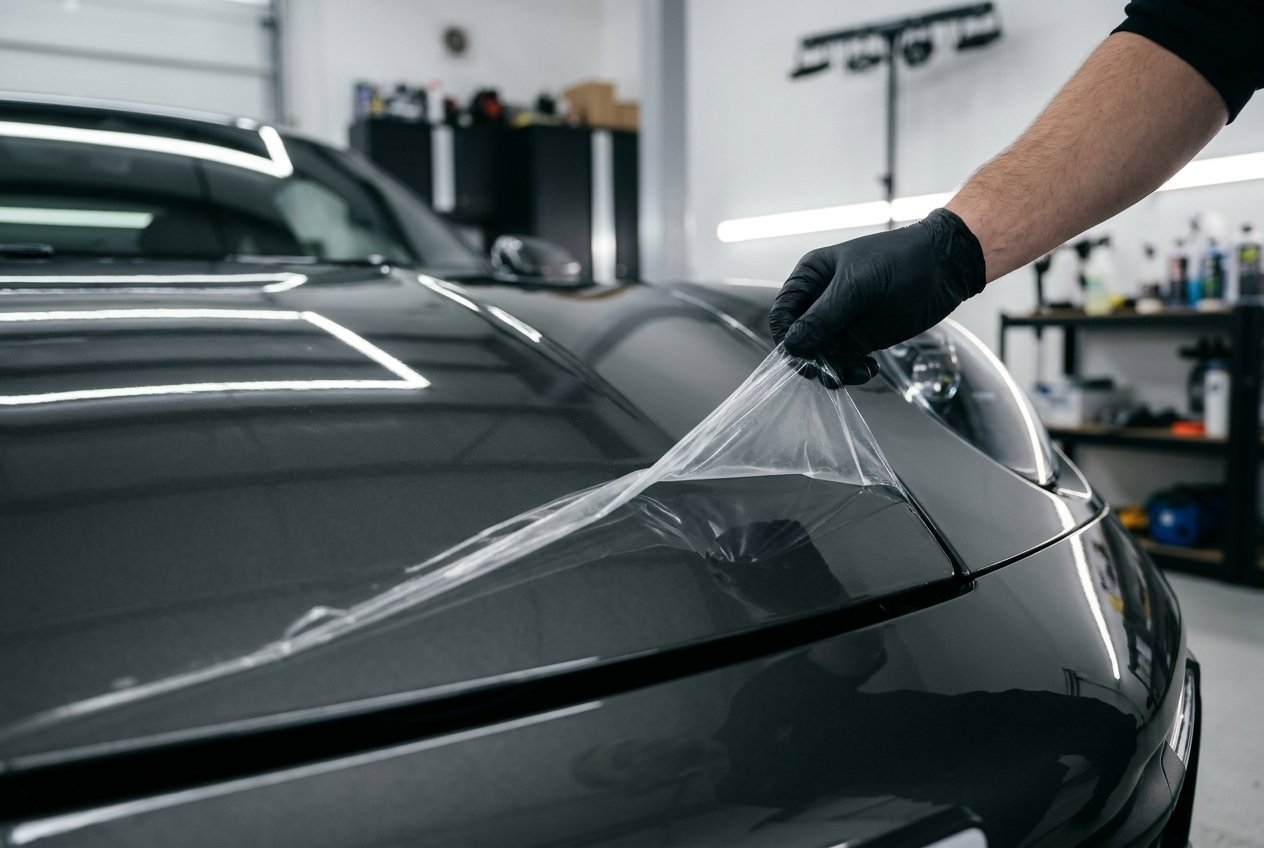
PPF is a clear film that sticks onto painted panels. Think of it like a screen protector for your car. It sits on top of the paint and takes daily wear in its place.
Its main job is to be a sacrificial layer. The film soaks up small knocks, so the factory paint stays as it was. When the film wears, you replace the film, not the paint.
Most fits cover the high-impact areas:
- Bonnet and bumper
- Wing mirrors
- Wing edges and door edges
- Sills behind the wheels
Film comes in gloss, matte and satin. So it can guard the paint without changing the look, or shift the finish on purpose. It isn't a wax or a coating. It's a real physical layer with genuine thickness, which is why it can take a hit.
What Paint Protection Film Actually Does Well
Stone chips are where PPF earns its keep. Main roads throw up grit and small stones at speed. Each one is a tiny impact. A chip that breaks the clear coat, the top see-through layer of your paint, lets water reach the metal below. That can start rust. The film takes those hits first.
Light scratches and swirls are the next win. Many modern films are self-healing. Warmth from the sun, or warm water, helps light marks fade out. Not every film does this, so it's worth asking which one you're getting.
Everyday muck matters too. Bird droppings, squashed bugs and tree sap land on the film, not the paint. Clean them off quickly all the same, as they can still etch over time.
The film also adds a shield between sunlight and your paint. That helps colours hold better, which counts on a car parked outside. And paint kept under film stays closer to its original state, which can help when you sell.
In our workshop, we've taken film off cars that came in for a check-up. The paint beneath still looked clean and even, with the wear sitting on the film instead.
The Limits of Paint Protection Film (Where It Doesn't Perform Miracles)
Now the honest part. PPF is strong, but it isn't armour.
- It won't stop dents. A trolley knock or a car park ding still dents the panel.
- It won't save you from crash damage or a large rock at speed.
- Deep cuts go through. A key scratch or sharp edge can slice the film. You replace the film, but if the blade reached the paint, that needs a repair.
- It doesn't hide damage already there. The film is clear, so old swirls and chips still show through.
- It wears over time. Every film has a lifespan. Cheaper or older films can yellow, crack or lift at the edges.
- Bare panels stay bare. If you only cover the bonnet, the doors aren't protected. Know which panels you've paid for.
| PPF protects against | PPF won't stop |
|---|---|
| Stone chips and grit | Dents and car park dings |
| Light scratches and swirls | Deep key scratches to the paint |
| Bird droppings, bugs, tree sap | Crash damage |
| UV fade on paint | Damage already on the paint |
Our paint protection film carries a 5-year warranty against yellowing and film failure, so you know where you stand.
Why Professional PPF Installation Makes a Difference
How well PPF works comes down to the fit as much as the film. A rushed fit can undo a good product. Here is how a careful fit runs:
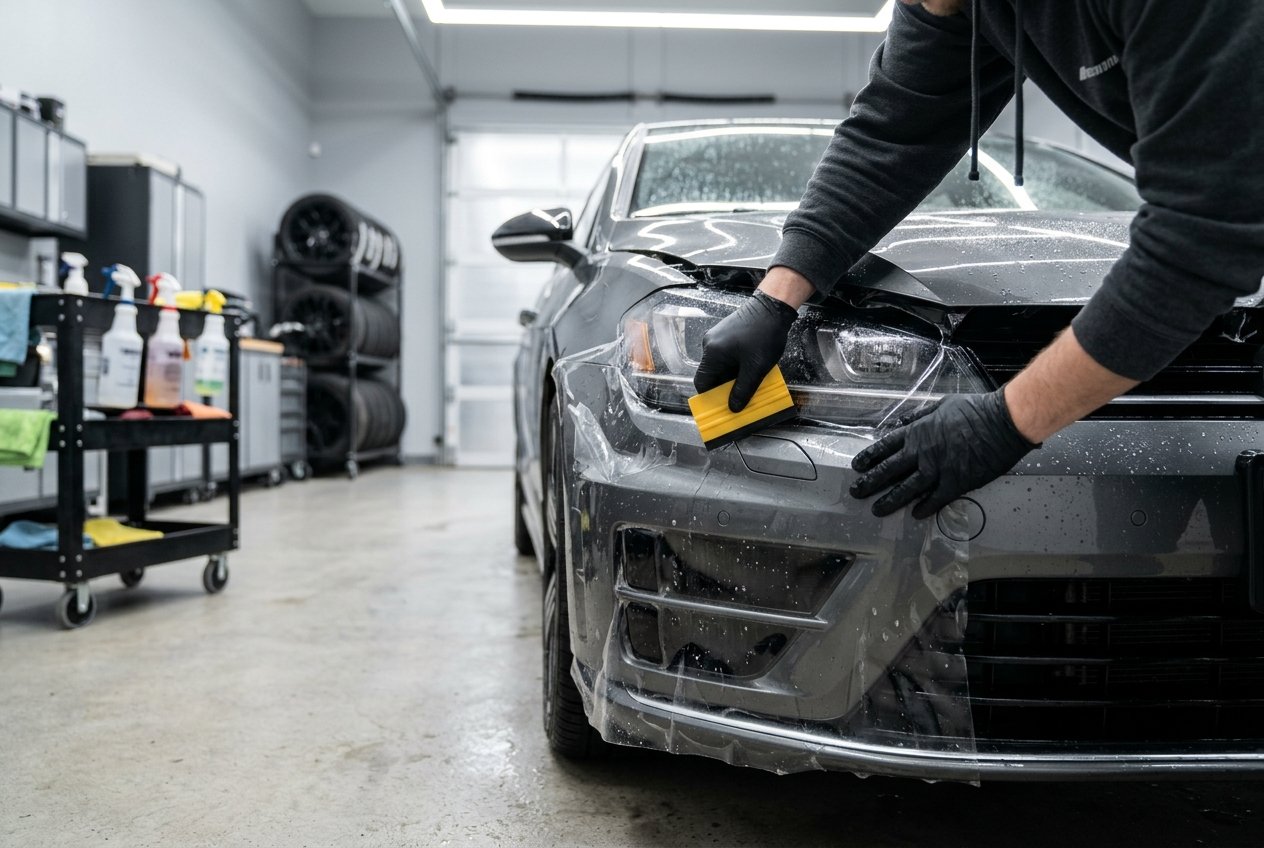
- Prep first. We wash, decontaminate and clay the paint, then inspect it. Any dust left under the film shows as a bump that stays.
- Cut to fit. We shape film to each panel so the edges land where they should.
- Wet application. A slip solution lets us slide the film into place.
- Squeegee out. We push out water and air so there are no bubbles.
- Trim and tuck. Edges wrapped round a panel resist lifting better than flush cuts.
- Cure. The film needs time to set. Rushing this in damp weather can let edges lift.
Navid checks every panel under a bright light before a single cut. Low light hides fine scratches and specks of dust. Catch them now, or they sit under the film for years.
Ask any installer which film they use and what the warranty covers. We're 3M-trained, with over 15 years fitting film and PPF in Leeds.
Is PPF Worth It for Driving Around Leeds?
Your roads and your miles decide a lot. Leeds winters bring gritting on main routes. That grit gets thrown up by traffic and peppers the front of your car. Regular motorway and ring-road miles add to the risk.
If you drive the M621, A58 or A64 often, your bonnet and bumper take more hits than a short town run.
PPF is likely worth it if you:
- Commute on the motorway or ring road
- Rack up high mileage each week
- Own a newer car with fresh paint
- Park on the street overnight (many homes around Leeds, Pudsey and Armley have no driveway)
Who gets less from it:
- Cars with paint already marked, unless you correct it first
- Cars that barely leave the garage
A simple way to choose: match the coverage to how you drive. A motorway commuter may want full front-end film. A town-only runabout may only need the bonnet and mirrors. Our service page breaks down the packages.
Pop into our workshop at 280 Tong Rd, Leeds LS12 3BG to see film on a real car. Call 0113 263 99 11 or get directions to our Tong Road workshop.
Ready to protect your paint? Get a free PPF quote.